
 Image 1 of 4
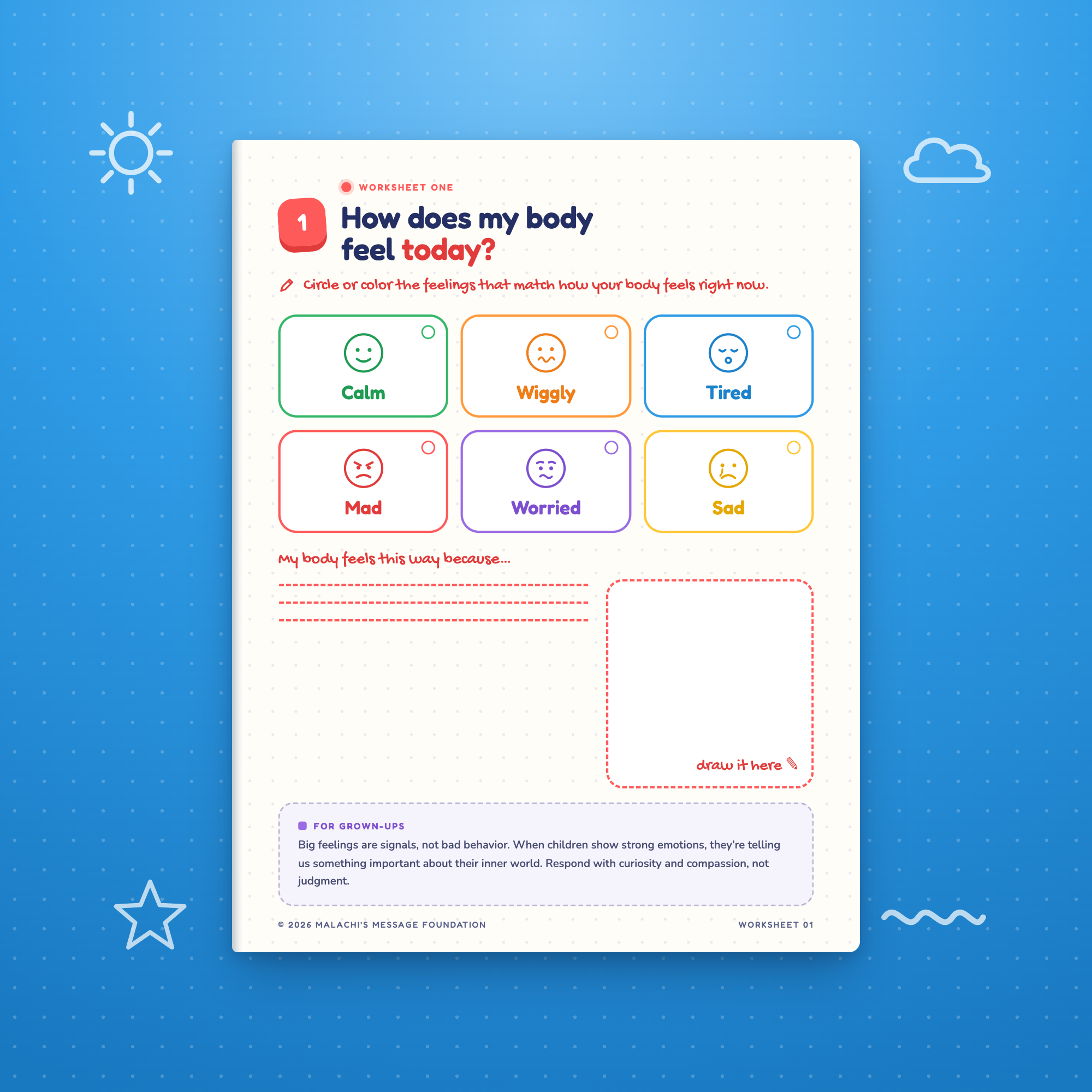 Image 2 of 4
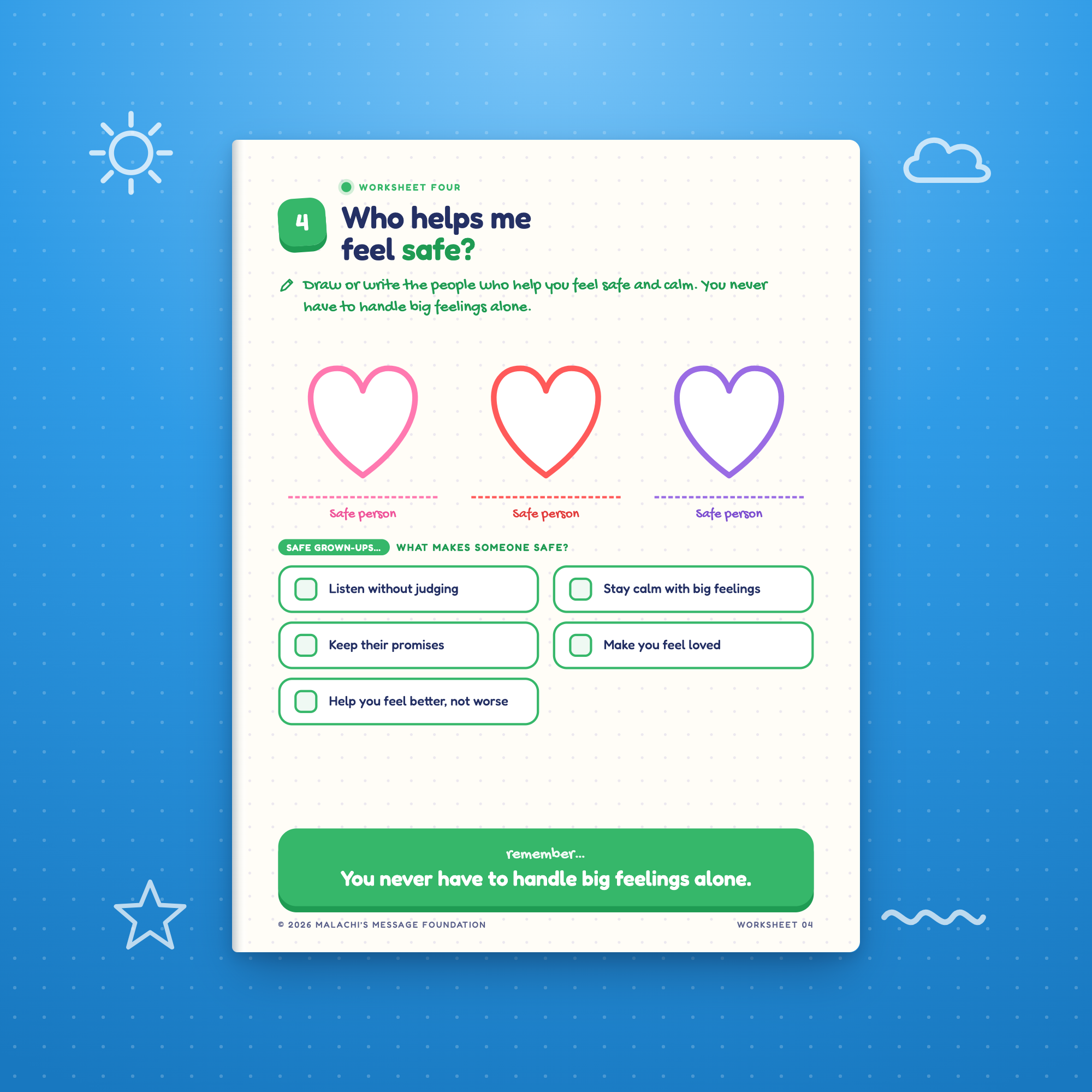 Image 3 of 4
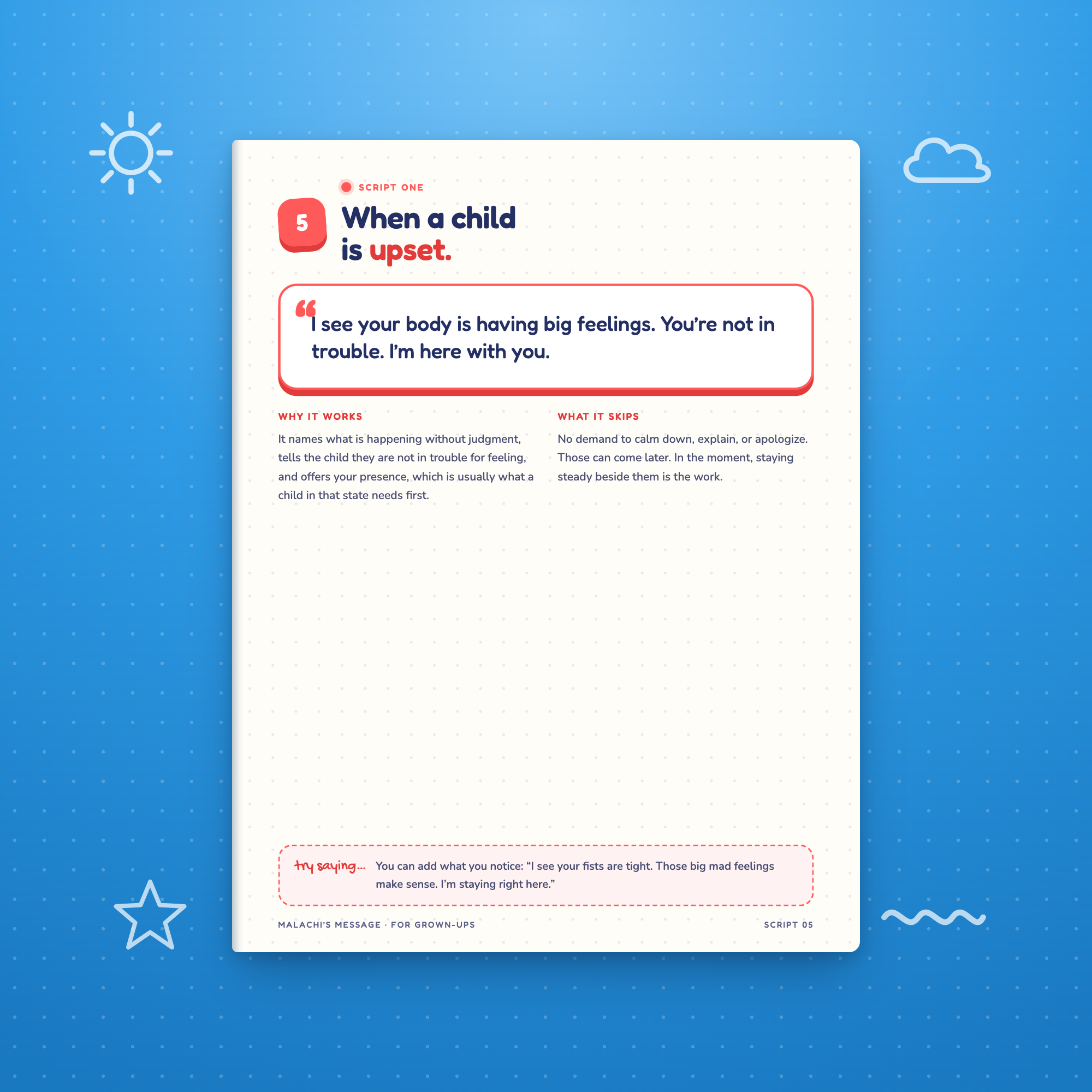 Image 4 of 4
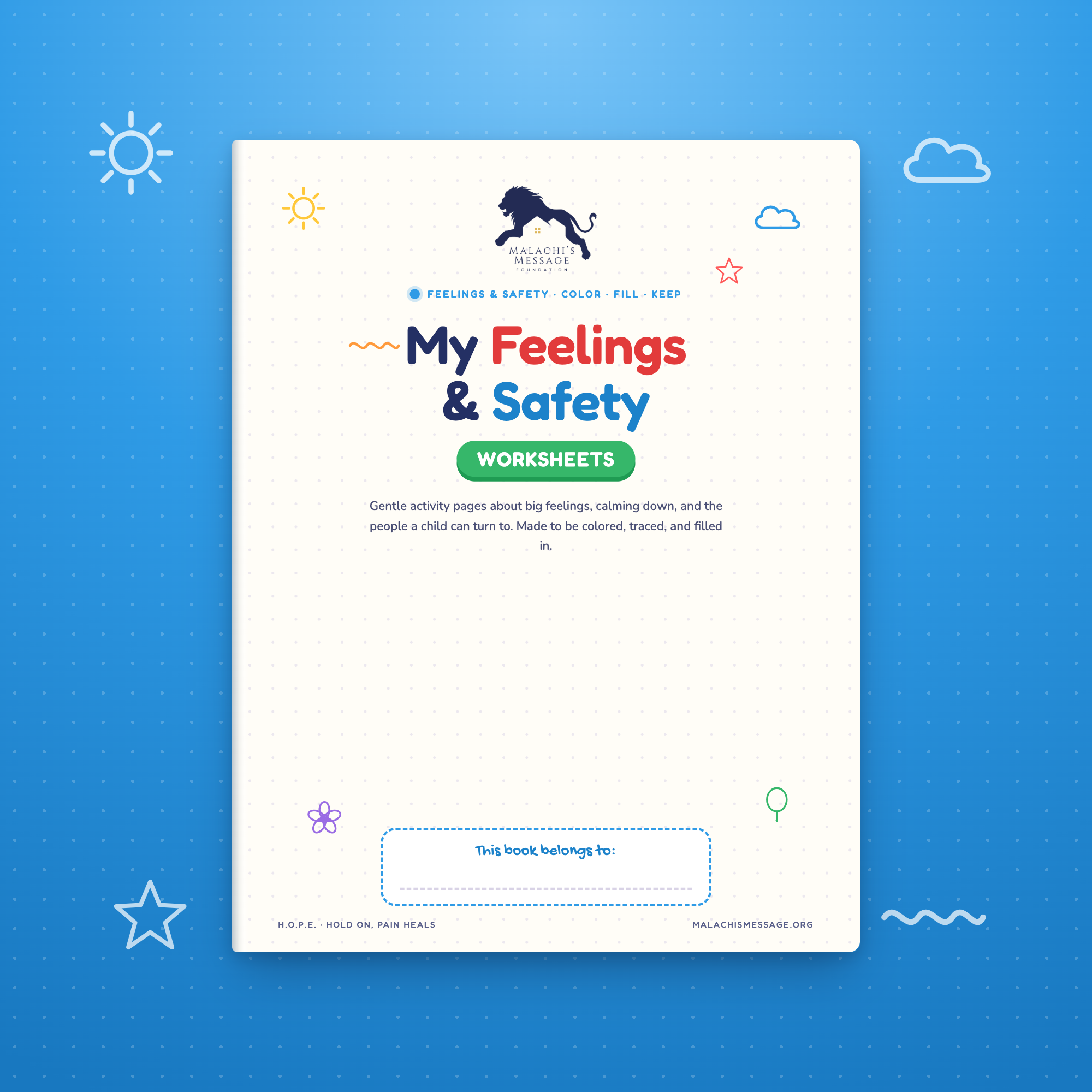
A child who can't find words for what's happening can usually still point at a face, or circle one, or color it in. That's what these four pages are for.
The first asks how the body feels today. Calm, wiggly, tired, mad, worried, sad, with room to draw the rest.
The second explains the alarm. Bodies have one, it goes off to keep you safe, and sometimes it goes off when nothing is wrong. There's a checklist of what that feels like, another of what helps, and a line to trace with a finger.
The third is a calm-down toolbox, three things a child picks and draws for themselves. The fourth is for the people they can turn to, three hearts to fill in, and a list of what makes a grown-up someone you can go to.
Behind those are five short scripts for the adults. What to say when a child is melting down, what to say when they've gone quiet, how to explain the alarm in words a child can hold, what to say at the end of a hard day, and what to say to a child who has decided something is wrong with them. Each one comes with why it lands and what it deliberately leaves out.
Print one page at a time as they come up, or print the set as a small workbook a child can put their name on.
Nothing here diagnoses or treats anything, and it does not replace working with a doctor or a therapist. These are pages to color and talk over.
Free to download upon check-out. Print it at home.
A child who can't find words for what's happening can usually still point at a face, or circle one, or color it in. That's what these four pages are for.
The first asks how the body feels today. Calm, wiggly, tired, mad, worried, sad, with room to draw the rest.
The second explains the alarm. Bodies have one, it goes off to keep you safe, and sometimes it goes off when nothing is wrong. There's a checklist of what that feels like, another of what helps, and a line to trace with a finger.
The third is a calm-down toolbox, three things a child picks and draws for themselves. The fourth is for the people they can turn to, three hearts to fill in, and a list of what makes a grown-up someone you can go to.
Behind those are five short scripts for the adults. What to say when a child is melting down, what to say when they've gone quiet, how to explain the alarm in words a child can hold, what to say at the end of a hard day, and what to say to a child who has decided something is wrong with them. Each one comes with why it lands and what it deliberately leaves out.
Print one page at a time as they come up, or print the set as a small workbook a child can put their name on.
Nothing here diagnoses or treats anything, and it does not replace working with a doctor or a therapist. These are pages to color and talk over.
Free to download upon check-out. Print it at home.