
 Image 1 of 3
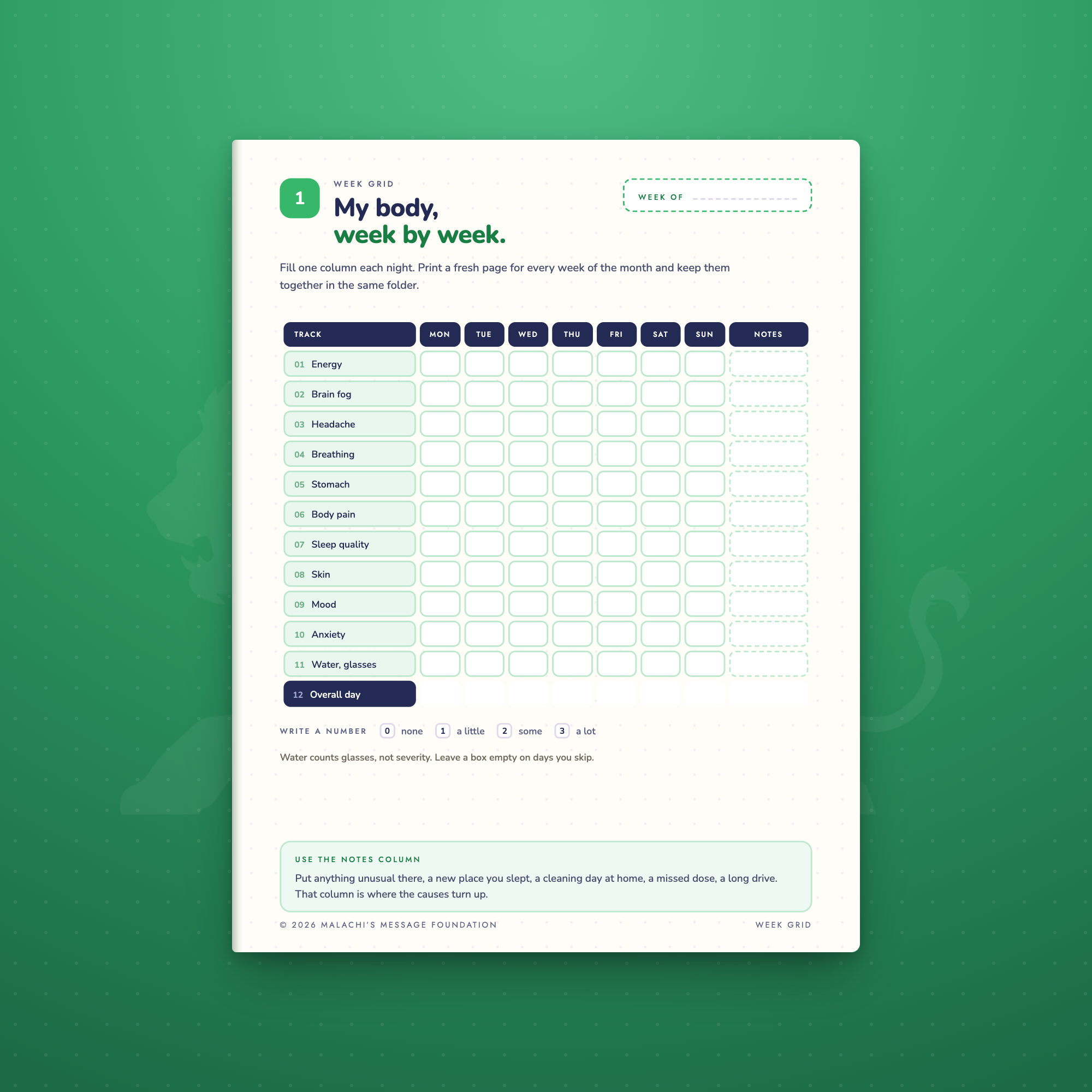 Image 2 of 3
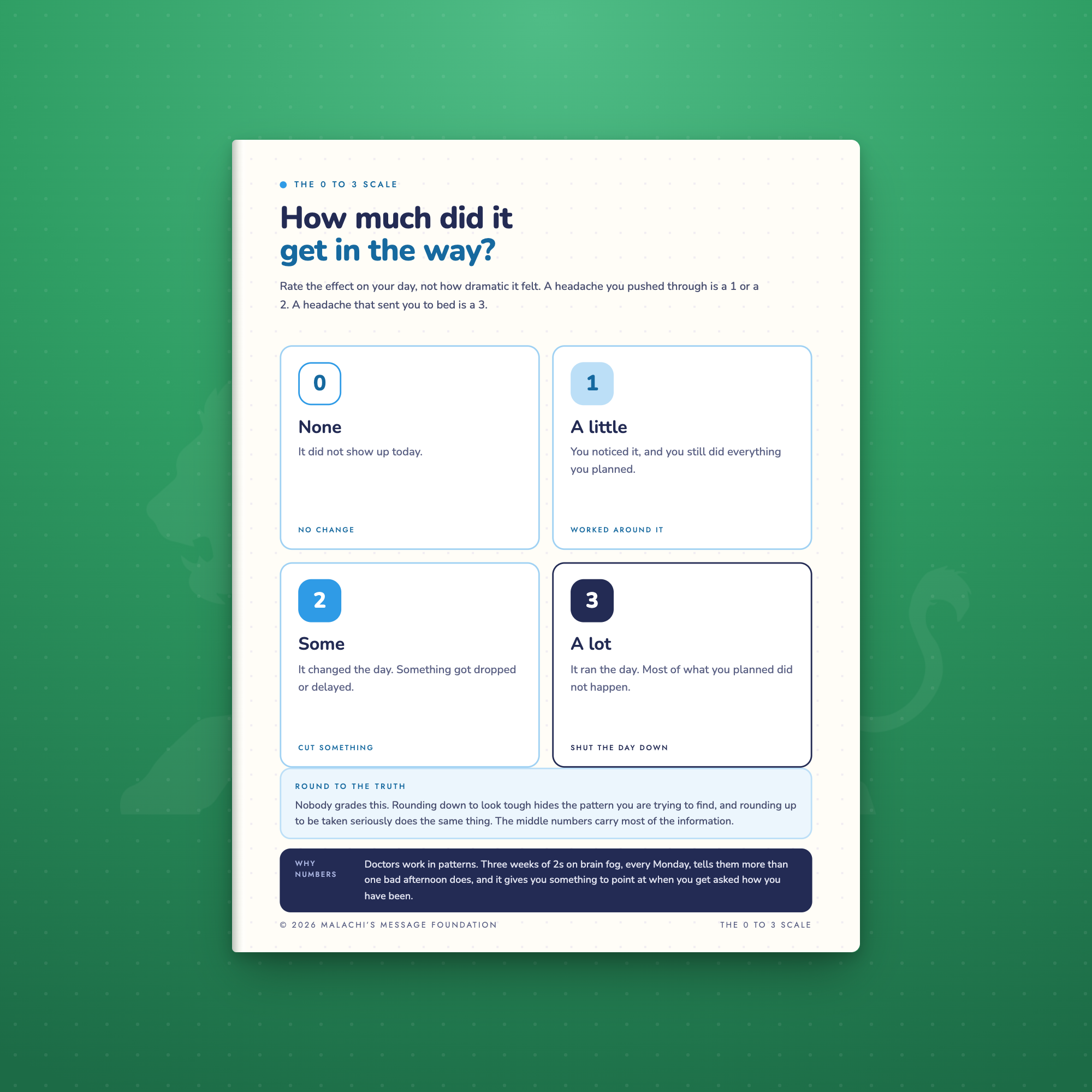 Image 3 of 3
A doctor asks how you've been, and you have about fifteen seconds to summarize six weeks. Most people say "fine, I guess," or describe whatever happened yesterday. This is the thing you bring instead.
One page a week. Twelve rows, energy through sleep and mood, each one rated 0 to 3 based on how much it got in the way that day. The scale is up to you, but it’s meant to be simple. An example could be that a headache you pushed through is a 1 or a headache that sent you to bed is a 3. The notes column is where the causes turn up: a new place you slept, a long drive, a cleaning day at home.
The notes page is four short lines about the day, written the way you'd text a friend. The graph page turns one row into a line across seven days, which is usually the first time a bad stretch looks like it has edges instead of going on forever.
There's even a page for parents at the back on how to be useful without taking it over, and a page of small habits that keep the thing from becoming a chore.
Print the week grid four times and staple it. Blank boxes are fine. Tracking is progress. Maybe a week with four columns filled shows you a pattern or helps you understand something you didn’t know.
Please note: nothing here diagnoses or treats anything, and it does not replace working with a doctor. This is a tracker and record you can bring to one.
Free to download upon check-out. Print it at home.
A doctor asks how you've been, and you have about fifteen seconds to summarize six weeks. Most people say "fine, I guess," or describe whatever happened yesterday. This is the thing you bring instead.
One page a week. Twelve rows, energy through sleep and mood, each one rated 0 to 3 based on how much it got in the way that day. The scale is up to you, but it’s meant to be simple. An example could be that a headache you pushed through is a 1 or a headache that sent you to bed is a 3. The notes column is where the causes turn up: a new place you slept, a long drive, a cleaning day at home.
The notes page is four short lines about the day, written the way you'd text a friend. The graph page turns one row into a line across seven days, which is usually the first time a bad stretch looks like it has edges instead of going on forever.
There's even a page for parents at the back on how to be useful without taking it over, and a page of small habits that keep the thing from becoming a chore.
Print the week grid four times and staple it. Blank boxes are fine. Tracking is progress. Maybe a week with four columns filled shows you a pattern or helps you understand something you didn’t know.
Please note: nothing here diagnoses or treats anything, and it does not replace working with a doctor. This is a tracker and record you can bring to one.
Free to download upon check-out. Print it at home.