
 Image 1 of 4
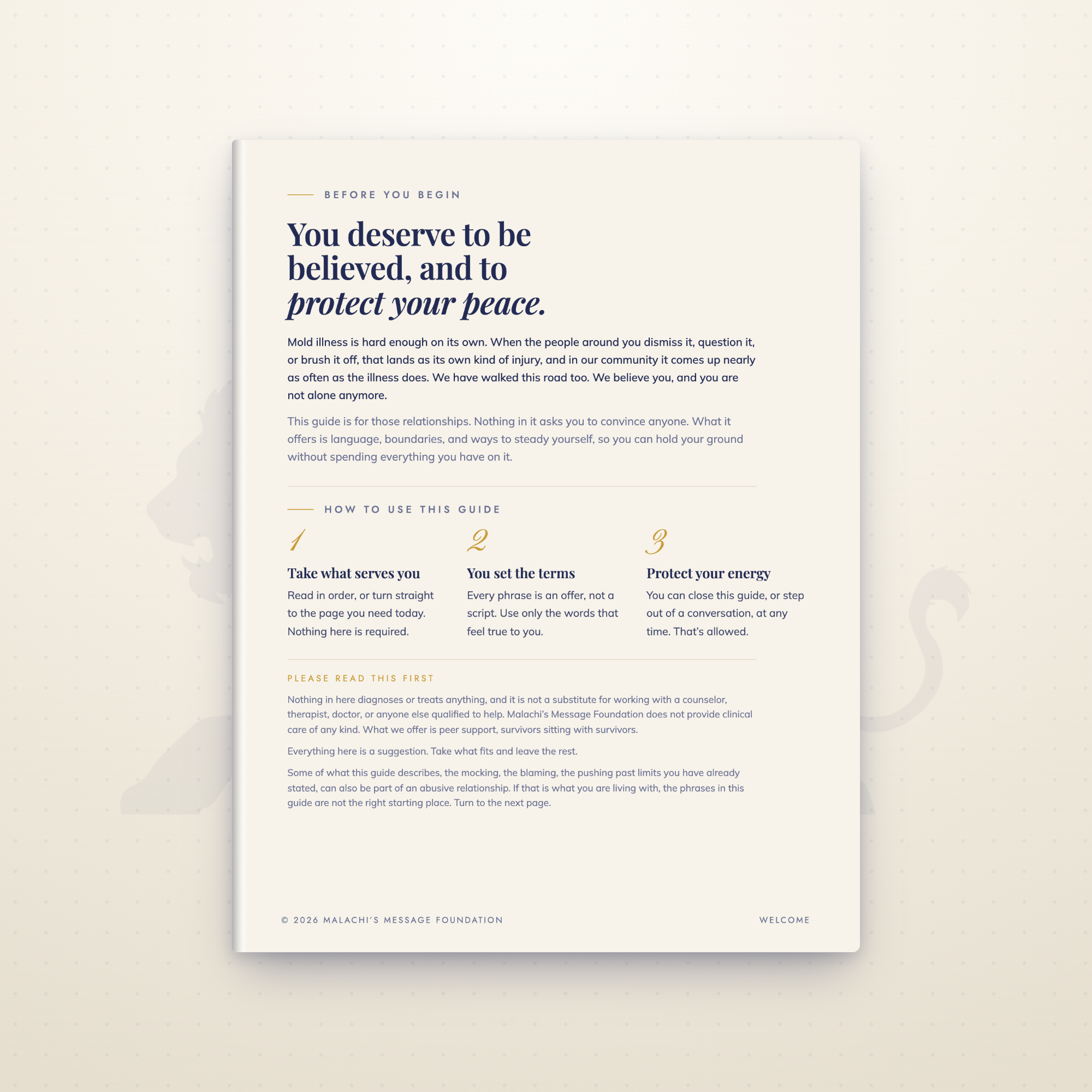 Image 2 of 4
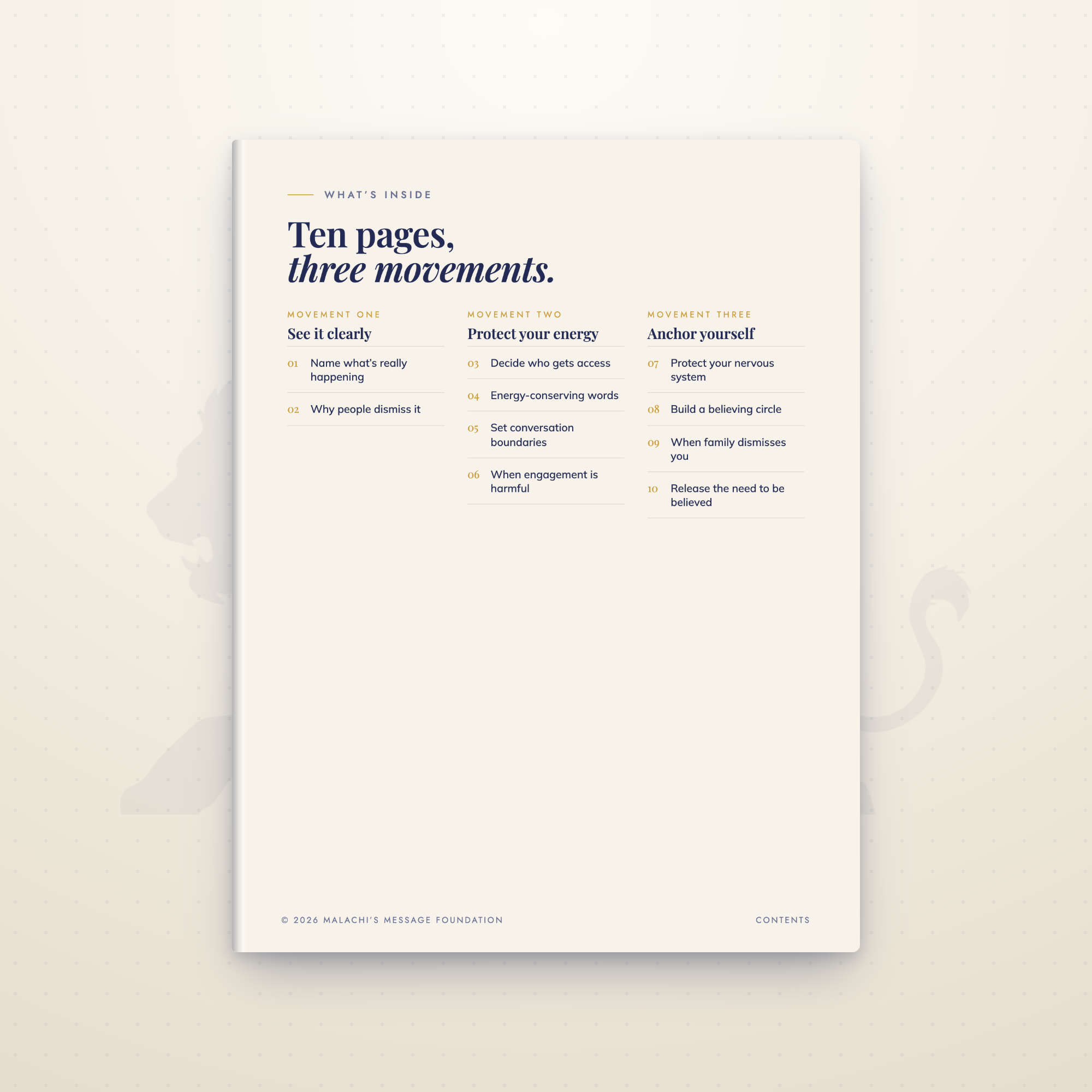 Image 3 of 4
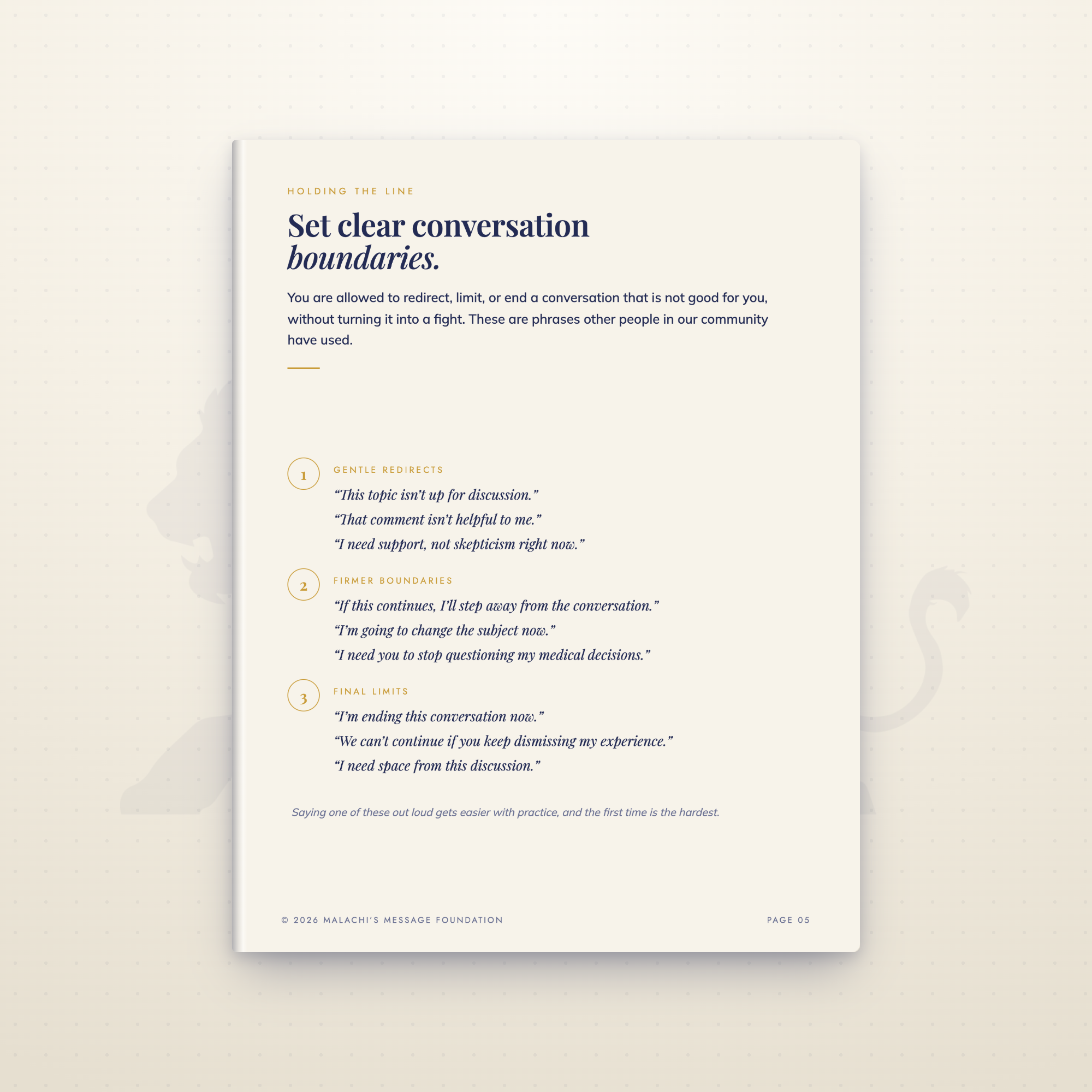 Image 4 of 4
Someone asks how you're doing, and there's a quick calculation before you answer. How much to say. Whether it's worth it. This guide is about that calculation, and about the relationships behind it.
Movement One covers naming what happens in those conversations, and why some people dismiss what they cannot see. Some of it is fear, some of it is outdated information, and some of it is money.
Movement Two is the practical middle. Deciding who gets access to your story, short phrases that hold a line without starting a fight, and how to tell when a conversation has stopped being worth having.
Movement Three turns back toward you. Steadying yourself after a hard exchange, finding the people who believe you without needing proof, what to do when the dismissal comes from family, and how much less it can cost you over time.
This guide was developed from the experiences of members of our community and our own story. Treat these as insight rather than a script, and use the parts that are true for you.
Please note: Nothing in here should be treated as a diagnosis, program, or treatment, and it does not replace working with a counselor, therapist, or doctor. What we offer is peer support, survivors sitting with survivors. Support groups are not a replacement for seeking professional care. There is a referral page near the front with resources for a variety of situations, including those who need help right away.
Free to download, available upon check-out. Print it at home.
Someone asks how you're doing, and there's a quick calculation before you answer. How much to say. Whether it's worth it. This guide is about that calculation, and about the relationships behind it.
Movement One covers naming what happens in those conversations, and why some people dismiss what they cannot see. Some of it is fear, some of it is outdated information, and some of it is money.
Movement Two is the practical middle. Deciding who gets access to your story, short phrases that hold a line without starting a fight, and how to tell when a conversation has stopped being worth having.
Movement Three turns back toward you. Steadying yourself after a hard exchange, finding the people who believe you without needing proof, what to do when the dismissal comes from family, and how much less it can cost you over time.
This guide was developed from the experiences of members of our community and our own story. Treat these as insight rather than a script, and use the parts that are true for you.
Please note: Nothing in here should be treated as a diagnosis, program, or treatment, and it does not replace working with a counselor, therapist, or doctor. What we offer is peer support, survivors sitting with survivors. Support groups are not a replacement for seeking professional care. There is a referral page near the front with resources for a variety of situations, including those who need help right away.
Free to download, available upon check-out. Print it at home.